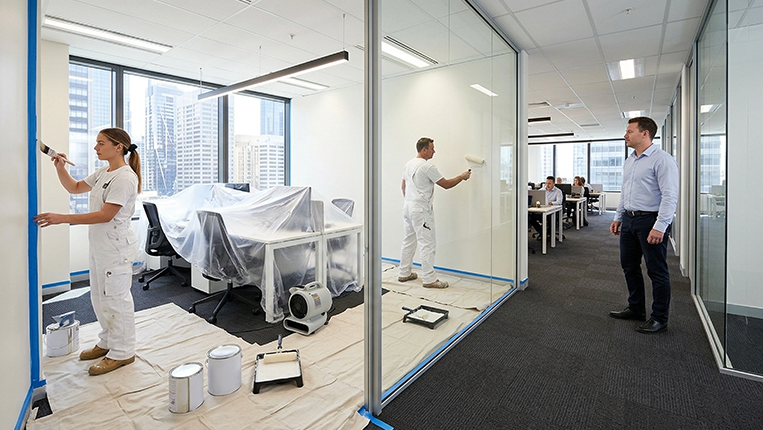
Yes, an office can often be repainted without closing, provided the work is planned in zones around your trading hours. Good office painting in Melbourne’s busier workplaces starts with a clear agreement on four things: building access, which areas are done on which night, how the space is ventilated, and what has to be ready when staff walk in the next morning.
That morning handover needs as much planning as the painting. Desks back in place, walkways clear, and nothing wet where someone might lean on it.
This guide from VS Painting Services sets out what to decide before you book, so you can work out whether an after-hours schedule suits your workplace at all.
Not every office suits night work
After-hours office painting in Melbourne makes the most sense when a space can’t easily be emptied during the day: a reception that faces clients, an open-plan floor with no spare desks, a team that keeps fixed client hours.
Weigh up the rooms before you weigh up the dates:
- Good candidates: walls and trims in defined zones, meeting rooms, corridors and reception areas.
- Harder candidates: rooms with equipment that can’t be moved or covered, and spaces in use around the clock, such as a server room.
- Worth a closer look: ceilings, large open floors and anything involving significant repairs, since these take more set-up and pack-down each night.
Some jobs run better as a mix: quiet rooms during the day, busy areas after close. Weekends may suit too, if your building allows contractors then.
Sort out the building before the dates
Night and weekend work involves more people than the office manager. If you lease, read the lease and talk to your landlord or building manager before you pencil in any dates.
Questions to settle early:
- Who issues keys, swipe cards and alarm codes, and who is responsible for them?
- Are there rules about after-hours contractors, lift bookings or the loading dock?
- Does the building’s air conditioning switch off overnight or at weekends?
- Who is the contact if something goes wrong at 11 pm?
- Does the colour need approval, particularly in shared areas or a foyer?
The air conditioning question is the one most often missed. WorkSafe Victoria’s hazard guidance for painters says to “Ensure work areas are well ventilated”, so find out how air will move through the floor if the building’s system is off after hours.
Break the office into zones
The most practical way to limit disruption is to divide the floor into zones and agree what happens in each one on each night. Your team then knows what to expect and when.
| Zone | Plan before painting | Check before staff return |
|---|---|---|
| Reception and client areas | Avoid nights before client events | Furniture and signage back, walls dry to touch |
| Open-plan desks | Staff clear desks; equipment covered or moved | Walkways clear, cables reconnected |
| Meeting rooms | Check the booking calendar | Room usable or clearly marked as unavailable |
| Kitchens and bathrooms | Plan around cleaners and deliveries | Fresh paint signposted |
| Corridors and exits | Keep exit routes open | Drop sheets and ladders removed |
Turn the table into a one-page run sheet with dates against each zone and send it to staff a week out. People will spot clashes you can’t see from a floor plan, such as a client visit or a deadline that needs a particular room. Ask them to clear personal items from walls and desks the afternoon before their zone is due, and to save their work and shut down anything they need to.
Agree on paint and airflow before the first night
In an occupied workplace, paint choice is a practical question as well as a colour one. WorkSafe Victoria suggests choosing low-toxicity paints, such as water-based products, and says to treat chemicals as potentially harmful unless the safety data sheet says otherwise.
Ask whoever quotes which products they’re proposing, and ask for the safety data sheets along with the product’s recoat and drying times. If anyone on your team has asthma, allergies or other sensitivities, raise it before the job is booked, not on the morning they walk in.
Whether a room is usable the next morning depends on the product, the airflow and the number of coats. Schedule the rooms you need first thing early in the job, so there’s a spare night to fall back on.
Plan Your Exterior Repaint
If weather damage has prompted your repaint, explore how exterior paint protects your home from harsh weather. Share your project details, and we’ll help plan the right solution for your home.
Older buildings need a hazard check before any sanding
If your building is older, this comes before colours and dates. WorkSafe Victoria says the person who manages or controls a workplace, or the employer, must keep an up-to-date asbestos register , and that it must be accessible to contractors who may encounter asbestos. Have it ready to share, or ask your landlord or building manager for it.
Lead is the other one. WorkSafe Victoria notes that lead paint was used on many buildings and structures built before 1970, and that dust from sanding can put employees, building occupants and people in neighbouring buildings at risk if removal isn’t properly managed. In a building that’s busy during the day, ask how any older surfaces will be tested and handled before anyone picks up a sander.
Comparing quotes for office painting in Melbourne
A quote should tell you exactly what you’re getting, and an after-hours job adds a few lines. The schedule can affect the price, so ask how it has been treated. When you compare quotes, check that each one covers:
- Which areas and surfaces are included, and how many coats.
- Preparation and patching, including any damage repairs.
- Working hours, number of nights and how the job is staged.
- Moving and covering furniture, and who is responsible for computers and IT equipment.
- Clean-up each night, the final walkthrough and touch-ups.
- Access arrangements, and what happens if a night is lost.
If wall damage is part of the reason for the repaint, this article covers repairing damaged walls before a commercial repaint. Ask each contractor for a current certificate of insurance and any induction details your building requires. Thinking of having staff do it over a weekend instead? Weigh it against professional painting versus doing it yourself.
Plan the morning handover
Agree one contact on your side and one on the painter’s side, with a short message at the end of each shift and a quick look around before staff arrive.
A morning walkthrough should confirm:
- Exits and walkways are clear and well lit, with no drop sheets left to trip on.
- Fresh paint is marked wherever it might still be touched.
- Furniture and equipment are back where they belong and plugged in.
- Access cards and keys are accounted for.
At the end of the job, do a full walkthrough together and agree any touch-ups and when they’ll be done. VS Painting’s commercial process finishes with an inspection, touch-ups and a clean-up, and that’s the easiest point to raise anything you’ve noticed.
Time it around the lease, not the last minute
Office painting in Melbourne usually follows a date: a rebrand, a new layout, repairs, or the start or end of a lease. If the repaint is part of a make-good at the end of a lease, check what the lease actually requires before you brief anyone, because that decides the scope.
Work backwards from the date that can’t move. Allow time for building approval, quotes, a colour decision and at least one lost night. A repaint booked with room to spare is far easier to run than one squeezed in the week before an opening.
If the job also takes in a home office or a residential property you manage, VS Painting handles interior painting for homes as well.
Where VS Painting works
VS Painting Services works across Melbourne’s eastern and south-eastern suburbs, including businesses near Dandenong and Ringwood. Call 0450 766 391 to talk through your workplace.
Questions office managers ask
Plan your office repaint
Planning office painting in Melbourne without closing? Share your floor plan, trading hours and building rules, and we’ll work through what’s practical for your workplace.